15 Benefits of Drinking Water from a Copper Bottle (Science + Ayurveda)
Your grandmother kept water in a copper vessel overnight. Your mother told you to drink it first thing in the morning. Turns out, they were right all along — and modern science agrees with them.
Drinking water stored in a copper bottle delivers real, measurable health benefits. This isn’t just ancient wisdom passed down through generations — researchers have confirmed copper’s antimicrobial, antioxidant, and anti-inflammatory properties in multiple peer reviewed studies. In this guide, we cover 15 benefits of drinking water from a copper bottle, how long to store the water, what to avoid, and why the quality of your copper bottle matters more than most people realise.
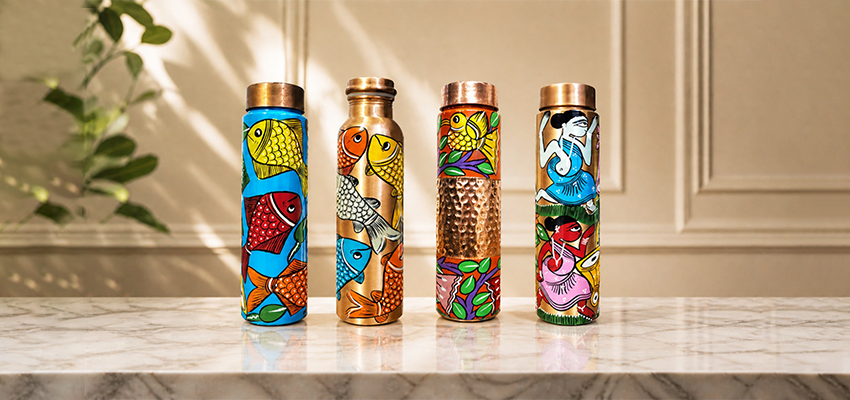
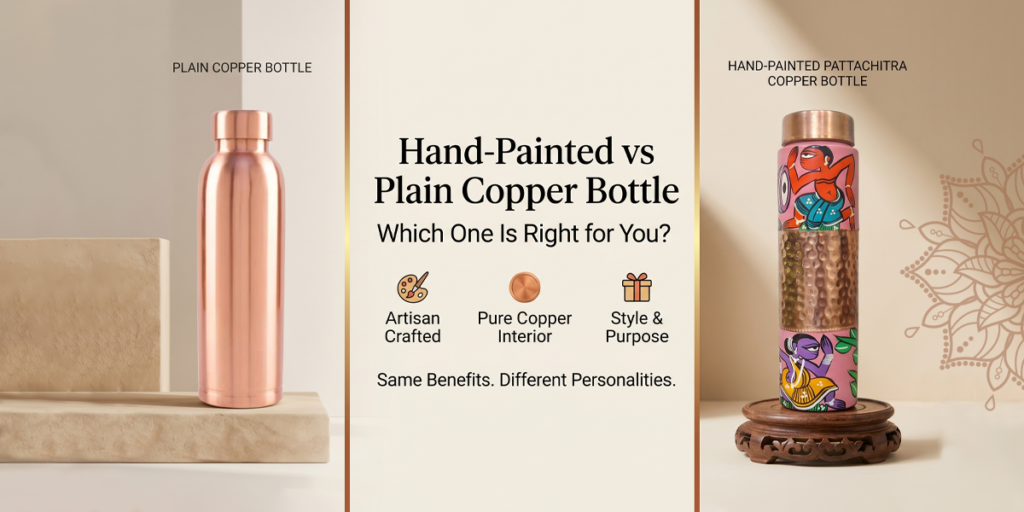
If you’re looking for a handmade copper bottle that’s both beautiful and functional, explore our collection of hand-painted and hammered copper bottles at Dirums.
What Happens When Water Sits in a Copper Bottle?
When water is stored in a copper vessel for 6–8 hours, a small and safe amount of copper leaches into it through a process called the oligodynamic effect. This copper-infused water — called Tamra Jal in Ayurveda — is what delivers all the benefits listed below.
The WHO’s safe upper limit for copper in drinking water is 2 mg per litre. Research shows that properly used copper vessels stay well within this range, making Tamra Jal safe for daily consumption for most healthy adults.

15 Benefits of Drinking Copper Water Daily
1. Kills Harmful Bacteria Naturally
Copper is a natural antimicrobial. Studies published in peer-reviewed journals confirm that copper ions destroy dangerous bacteria including E.coli, Salmonella, and Staphylococcus aureus by penetrating their cell walls and neutralising them. For Indian households that rely on stored water, a copper bottle adds a powerful natural layer of purification.
2. Prevents Water-Borne Diseases
Contaminated water causes cholera, typhoid, jaundice, and dysentery. Copper’s antibacterial properties significantly reduce the microbial load in stored water, making it a powerful, chemical-free option for protecting your family — especially during summers when bacterial growth spikes.
3. Improves Digestion
Copper stimulates peristalsis — the rhythmic contraction of your stomach muscles that moves food through your digestive system. It also helps balance stomach acidity and improves your body’s ability to absorb iron. People suffering from regular gas, bloating, or acidity often report noticeable improvement after switching to copper water in the morning.
4. Boosts Immunity
Copper plays a key role in the production of white blood cells — your body’s primary defence against infection. It also acts as a co-factor for several enzymes that repair tissues and fight oxidative stress. Regular copper water consumption supports a stronger, more responsive immune system over time.
5. Supports Heart Health
Copper helps regulate blood pressure, heart rate, and cholesterol levels. It reduces arterial inflammation and assists in clearing cholesterol buildup from artery walls. Research indicates that adequate copper intake is associated with lower risk of heart disease — particularly important given that cardiovascular conditions are rising sharply across India.

5. Supports Heart Health
Copper helps regulate blood pressure, heart rate, and cholesterol levels. It reduces arterial inflammation and assists in clearing cholesterol buildup from artery walls. Research indicates that adequate copper intake is associated with lower risk of heart disease — particularly important given that cardiovascular conditions are rising sharply across India.
6. Aids Weight Management
Copper activates lipase — an enzyme that helps break down fat cells and convert stored fat into usable energy. It also stimulates the release of norepinephrine, which can accelerate metabolism. Drinking copper water in the morning on an empty stomach is a traditional Ayurvedic recommendation for managing weight naturally over time.
7. Reduces Inflammation and Joint Pain
Copper has significant anti-inflammatory properties. It strengthens joint tissue elasticity and reduces muscle stiffness. People with arthritis and rheumatoid arthritis have long used copper therapy in Ayurvedic tradition — and modern research supports its role in reducing inflammatory markers in the body.
8. Promotes Radiant Skin
Copper is essential for the production of melanin — the pigment that gives your skin its colour and protects it from UV damage. It also supports the production of new skin cells and collagen fibres. The antioxidants in copper fight free radicals, which are the primary cause of premature ageing, dull skin, and uneven tone.
9. Slows Visible Signs of Ageing
Fine lines, wrinkles, and age spots are caused by free radical damage. Copper is a potent antioxidant that neutralises free radicals and encourages cell regeneration — giving your skin a firmer, more youthful appearance over time. This is why copper has been used in traditional beauty rituals across South Asia for centuries.
10. Regulates Thyroid Function
The thyroid gland requires copper to produce and properly absorb thyroid hormones. A copper deficiency can contribute to hypothyroidism, irregular metabolism, fatigue, and hormonal imbalance. Copper water is a gentle, food-safe way to support thyroid health as part of a balanced diet.

11. Strengthens Bones
Copper is required for the formation of collagen and elastin — the structural proteins that keep your bones dense and flexible. Regular copper intake supports bone mineral density and may help reduce the risk of osteoporosis, particularly in women above 40.
12. Supports Brain Function
Copper plays a role in the synthesis of phospholipids — the fats that form the myelin sheath around your nerves. A well-functioning nervous system depends on adequate copper levels. Ayurvedic texts describe copper water as medhya — beneficial for mental clarity and cognitive health.
13. Helps Prevent Anaemia
Iron deficiency anaemia is one of the most common nutritional problems in India, especially among women. Copper is essential for the body to absorb iron properly and synthesise haemoglobin. Drinking copper water — especially alongside iron-rich foods — supports healthy red blood cell production.
14. Balances All Three Doshas
In Ayurveda, copper water is considered tridosha nashak — meaning it helps balance Vata, Pitta, and Kapha, the three fundamental energies of the body. Storing water in a copper vessel overnight and drinking it first thing in the morning is a cornerstone of traditional Ayurvedic morning routines (dinacharya) for maintaining holistic health.
To understand the full Ayurvedic science behind this practice, read our in-depth guide: Ayurvedic Science of Copper Water – What Research Actually Says.
15. A Daily Ritual That Connects You to Craft
This one isn’t in any medical textbook — but it matters. When your copper bottle is hand-painted by an artisan from Rajasthan or Odisha, drinking from it becomes more than a health habit. It becomes a daily moment of connection — with Indian craft, with a maker’s story, with something that is uniquely, beautifully yours.
At Dirums, every copper bottle is made by hand. No two pieces are identical. The artisan who painted yours spent hours on it. That’s a kind of value no mass-produced bottle can offer.
How to Use a Copper Bottle Correctly
Getting the full benefits of copper water requires using the bottle the right way:
Store overnight, drink in the morning. Fill your copper bottle with water at room temperature before bed. Let it sit for 6–8 hours. Drink the first 1–2 glasses on an empty stomach in the morning.
Do not refrigerate. Cold temperatures slow down the oligodynamic effect. Always store at room temperature.
Drink in moderation. 2–3 glasses of copper water per day is sufficient. The WHO recommends a safe upper limit of 2mg copper per litre — a properly used copper bottle stays within this range.
Avoid acidic liquids. Never store lemon water, juices, or any citrus-based drinks in your copper bottle. Acid accelerates copper leaching beyond safe levels.
How to Clean Your Copper Bottle (Important)
Copper naturally oxidises over time, forming a dark patina or greenish layer (called verdigris) inside. This needs to be cleaned regularly for safe use.
Natural cleaning method: Fill the bottle with a mixture of lemon juice and salt. Let it sit for 10 minutes. Rinse thoroughly with plain water. Do this once a week.
Never use chemical cleaners or steel scrubbers — they damage the inner surface and can cause excessive copper leaching.
For a complete step-by-step cleaning guide with tips specific to hand-painted bottles, read: How to Clean & Maintain a Copper Bottle at Home.
Who Should Avoid Copper Water?
Copper water is safe for most healthy adults, but a few groups should consult a doctor first:
- People with Wilson’s disease (a condition where the body cannot process copper)
- Those with existing liver or kidney conditions
- Pregnant women and infants
- People already taking copper supplements
When in doubt, start with one glass per day and observe how your body responds.
FAQ — Copper Bottle Benefits
Q1: What is the main benefit of drinking water from a copper bottle?
The primary benefit is natural antimicrobial purification. Copper ions destroy harmful bacteria and viruses in stored water, making it safer to drink. Beyond purification, regular copper water consumption supports digestion, immunity, heart health, and skin quality — making it one of the most multi-purpose wellness habits you can adopt.
Q2: How many hours should water be kept in a copper bottle before drinking?
Water should be stored in a copper bottle for a minimum of 6 hours, ideally overnight (8 hours), at room temperature. This allows sufficient time for the oligodynamic effect to work and for safe levels of copper to infuse into the water. Avoid storing water for more than 16–18 hours at a stretch.
Q3: Can we drink copper water daily?
Yes, for most healthy adults, 2–3 glasses of copper water per day is safe and beneficial. The WHO sets the safe upper limit for copper in drinking water at 2 mg per litre. Using a good-quality copper bottle and not storing water for excessive periods keeps consumption well within this safe range.
Q4: Is copper water good for skin?
Yes. Copper is essential for melanin production, collagen synthesis, and cell regeneration — all of which directly improve skin quality. Regular consumption of copper water can help reduce acne, improve skin texture, even out skin tone, and slow the appearance of fine lines and wrinkles over time.
Q5: What are the disadvantages of a copper water bottle?
The main risk is excessive copper intake from improper use — storing water too long, using damaged bottles, or storing acidic drinks. Symptoms of copper toxicity include nausea, vomiting, and stomach cramps. Using a quality copper bottle correctly (6–8 hours storage, room temperature, no citrus liquids, regular cleaning) eliminates this risk for most people.
Conclusion
Drinking water from a copper bottle is one of the simplest, most research-backed wellness habits you can build. From killing bacteria and improving digestion to supporting heart health, skin, and immunity — the 15 benefits covered in this guide are rooted in both Ayurvedic tradition and modern science.
The key is using a quality copper bottle correctly: store overnight, drink on an empty stomach, clean weekly, and avoid acidic liquids.
If you’re ready to start, explore Dirums’ collection of handmade, hand-painted copper bottles. Each bottle is crafted by Indian artisans, making it as beautiful to display as it is beneficial to use.
Blog
Get fresh home inspiration and helpful tips from our interior designers