Hammered Surahi : History & Complete Guide to India’s Traditional Water Vessel
You’ve seen its silhouette a hundred times — in old miniature paintings, on village rooftops, in your grandparents’ home: a graceful vessel with a round, full body and a long, slender neck. That’s a surahi, and it was India’s original “smart bottle” centuries before plastic existed. The modern hammered copper surahi brings this 1,000-year-old design to your bedside, pairing the wellness of copper with a shape that was quietly engineered to keep water cool and pour cleanly. This guide covers what a surahi is, where it came from, why its shape is so clever, the different types, and how to choose and care for one.

What Is a Surahi? (Quick Answer)
A surahi (also spelled suhrahi) is a traditional South Asian water vessel with a wide, rounded base, a long narrow neck, and a flared pouring lip. Made historically from clay or metal, it was designed to store and cool drinking water while reducing spills and evaporation. Today’s hammered copper surahis add the health benefits of storing water in copper, and many include an inbuilt lid that doubles as a drinking cup.
A Short History of the Surahi
The surahi’s story is really the story of Indian craftsmanship adapting to climate and need.
Ancient roots. The shape began in clay. The Indian subcontinent has a pottery tradition stretching back to the Indus Valley Civilisation, where advanced terracotta water storage was already in use thousands of years ago. The narrow-necked, round-bodied form was perfect for keeping water cool and clean in a hot climate.
Medieval and Mughal refinement. In the medieval and Mughal eras, royal artisans translated the clay form into metals — especially copper and brass. This is also when the hammered finish became widespread: tapping the metal with a mallet wasn’t only decorative, it made the vessel stronger and helped it handle heat more evenly. (For the full craft process behind that texture, see how copper bottles are made by hand.)
The original travel bottle. Through the 19th and 20th centuries, the surahi became a travel companion — people carried metal surahis in portable holders to keep cool drinking water on long train journeys across India, long before refrigeration was common.

Why the Surahi Shape Is So Clever
Every part of a surahi has a purpose. This is what most product listings never explain:
- Narrow neck → less evaporation, fewer spills, no dust. The slim opening limits how much water escapes as vapour and keeps debris out.
- Wide, rounded base → capacity and stability. It holds plenty of water and won’t tip over on your bedside or dining table.
- Long neck → controlled, graceful pour. You get a clean, slow stream — easy to fill a glass at night without splashing.
- Cooling. In clay versions, the porous body cools water naturally (more on that below); in copper, the metal holds a cool, steady temperature far better than plastic.
The Types of Surahi
Copper surahi — the most popular modern choice for wellness. A hammered copper surahi stores water the Ayurvedic way and is built for daily use. Many feature an inbuilt lid that doubles as a cup, so it’s self-contained on your nightstand.
Brass surahi — traditionally used more for serving than storage, brass surahis often carry intricate hand-worked medallions and elaborate spouts, making them a festive home-décor piece.
Clay / terracotta surahi (the matka cousin) — the original. Unglazed clay cools water through evaporation. Some modern versions wrap a porous clay core in a hammered metal shell, combining ancient evaporative cooling with a tougher, decorative exterior.

How Does a Surahi Keep Water Cool?
It depends on the material. A clay surahi cools through evaporative cooling: tiny amounts of water seep through the porous walls and evaporate from the surface, and that evaporation pulls heat out of the water inside — naturally chilling it without any electricity. A copper surahi doesn’t evaporate, but copper resists warming up quickly and holds a cool, steady temperature far better than plastic or glass. In both cases, the narrow neck reduces contact with warm air. It’s a genuinely elegant, zero-energy solution to a hot climate.
The Copper Surahi’s Wellness Bonus
Because a copper surahi is made from pure copper, it offers the same wellness as any quality copper vessel: it naturally helps purify stored water and supplies trace copper to the body. Rather than repeat the details here, we’ve covered them properly in two dedicated guides — the practical benefits of drinking water from a copper bottle, and the Ayurvedic science behind copper water (Tamra Jal), including what research actually confirms. The short version: fill it at night, drink in the morning, and keep it in moderation.
How to Use a Copper Bottle Correctly
Getting the full benefits of copper water requires using the bottle the right way:
Store overnight, drink in the morning. Fill your copper bottle with water at room temperature before bed. Let it sit for 6–8 hours. Drink the first 1–2 glasses on an empty stomach in the morning.
Do not refrigerate. Cold temperatures slow down the oligodynamic effect. Always store at room temperature.
Drink in moderation. 2–3 glasses of copper water per day is sufficient. The WHO recommends a safe upper limit of 2mg copper per litre — a properly used copper bottle stays within this range.
Avoid acidic liquids. Never store lemon water, juices, or any citrus-based drinks in your copper bottle. Acid accelerates copper leaching beyond safe levels.
How to Clean Your Copper Bottle (Important)
Copper naturally oxidises over time, forming a dark patina or greenish layer (called verdigris) inside. This needs to be cleaned regularly for safe use.
Natural cleaning method: Fill the bottle with a mixture of lemon juice and salt. Let it sit for 10 minutes. Rinse thoroughly with plain water. Do this once a week.
Never use chemical cleaners or steel scrubbers — they damage the inner surface and can cause excessive copper leaching.
For a complete step-by-step cleaning guide with tips specific to hand-painted bottles, read: How to Clean & Maintain a Copper Bottle at Home
Who Should Avoid Copper Water?
Copper water is safe for most healthy adults, but a few groups should consult a doctor first:
- People with Wilson’s disease (a condition where the body cannot process copper)
- Those with existing liver or kidney conditions
- Pregnant women and infants
- People already taking copper supplements
When in doubt, start with one glass per day and observe how your body responds.
Surahi vs a Regular Copper Bottle: Which Should You Choose?
They’re built for different lives:
- Choose a hammered surahi if you want a bedside or dining-table vessel with old-world charm, a larger capacity, and a piece that looks beautiful even when not in use. The inbuilt-cup designs are ideal for a nightstand.
- Choose a regular copper bottle if you need something portable to carry to the office, gym, or while travelling.
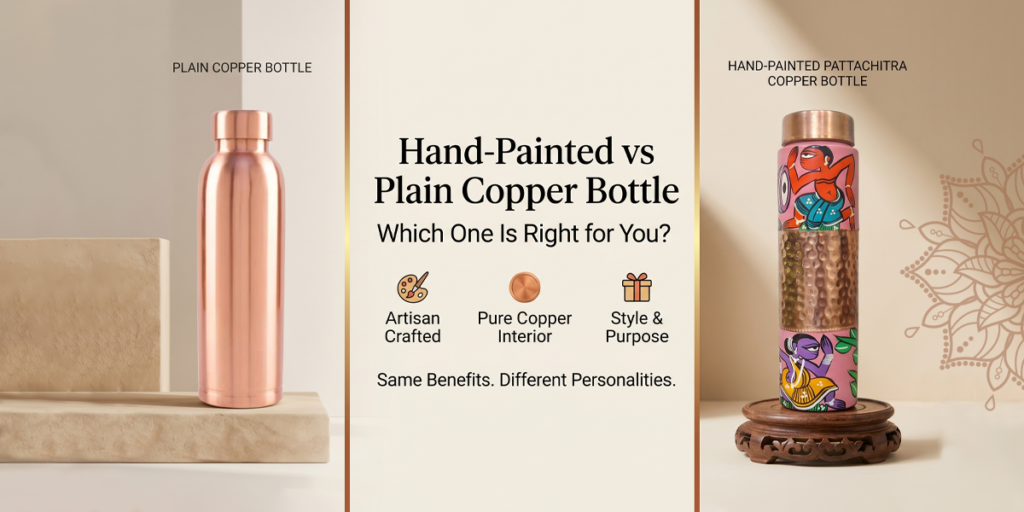
Many people own both — a slim bottle for the day, and a surahi for the bedroom. If you’re weighing designs, our guide on hand-painted vs plain copper bottles applies to surahis too.
How to Use and Care for a Hammered Copper Surahi
- Rinse before first use with warm water and a little lemon.
- Fill at night with filtered water; let it rest 8–12 hours at room temperature.
- Drink in the morning for the classic copper-water routine.
- Clean the inside every 1–2 weeks with lemon and salt. Never scrub the hammered or painted exterior with steel wool or harsh abrasives — wipe it gently with a soft cloth. The hammered texture is great at hiding minor marks, so it needs little effort. (Full step-by-step method: how to clean a copper bottle.)
- Expect a patina. Authentic copper darkens over time — that’s a sign it’s real, not coated. Gentle, occasional polishing restores the shine if you prefer it bright.
How to Choose a Good Hammered Surahi
Before you buy, check three things: it should be 99% pure copper (not copper-plated steel), the interior must be uncoated so water touches the metal directly, and it should have a secure, leak-proof lid. A genuine handcrafted surahi will also show subtle variations in its hammering — proof of a human hand, not a machine.
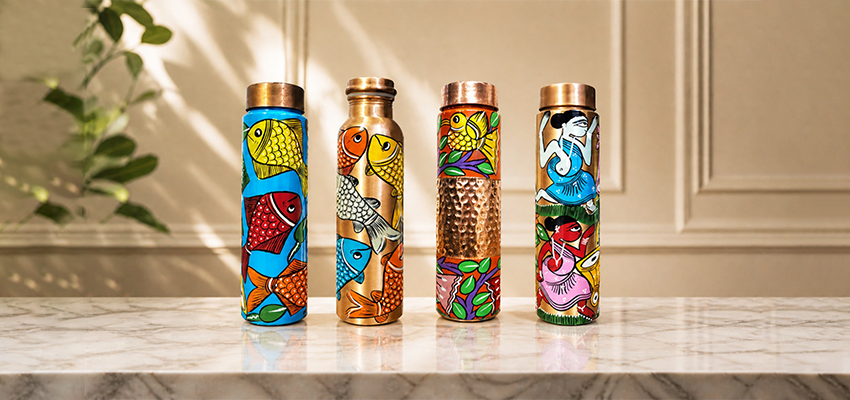
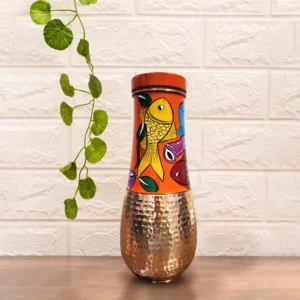
Dirums’ hammered design surahi collection is handmade from 99% pure copper with an uncoated interior, in designs from a classic plain copper surahi to hand-painted fish and tribal motifs — several with an inbuilt-glass lid. Each is crafted by Indian artisans, so no two are exactly alike.
FAQ
What is a surahi water bottle?
A surahi is a traditional Indian water vessel with a wide, rounded base and a long, narrow neck, finished with a flared pouring lip. Made historically from clay, copper or brass, it was designed to store and cool drinking water while reducing spills and evaporation. Modern hammered copper surahis add the health benefits of copper and often include a lid that doubles as a cup.
Why does a surahi keep water cool?
A clay surahi cools water by evaporation — water seeps through the porous walls and evaporates, pulling heat out and chilling the water inside without electricity. A copper surahi doesn’t evaporate, but copper holds a cool, steady temperature far better than plastic and resists warming quickly. In both, the narrow neck limits contact with warm air, helping keep the water cool.
What is the difference between a copper surahi and a clay surahi?
A clay (terracotta) surahi cools water through natural evaporation and gives it an earthy taste, but is fragile and porous. A copper surahi doesn’t cool by evaporation, but it’s durable, leak-proof, and adds copper’s wellness benefits — it naturally helps purify stored water and supplies trace copper. Copper suits daily long-term use; clay is prized for summer cooling.
Is a hammered copper surahi better than a regular copper bottle?
Neither is better overall — they suit different needs. A surahi has a larger, rounded body and is ideal as a bedside or dining-table vessel, often with an inbuilt-cup lid. A regular copper bottle is slimmer and better for carrying to work, the gym, or travel. Both give the same copper-water benefits when made from pure, uncoated copper.
How do I care for the hammered texture on a copper surahi?
Clean only the inside with a lemon-and-salt mix, then rinse and dry. For the hammered exterior, wipe gently with a soft cloth — never use steel wool or harsh abrasives, which scratch the metal and damage any painted design. The textured surface naturally hides
minor marks. Allow the natural patina to form, and polish occasionally only if you prefer a brighter shine.
Conclusion
The surahi is proof that good design lasts. Its clever, climate-smart shape kept Indian homes hydrated for centuries — and in hammered copper, it adds real wellness and timeless beauty to your space. As a bedside vessel, a dining centrepiece, or a thoughtful gift, a copper surahi brings heritage and health together. Explore the handcrafted Dirums hammered surahi range, or browse the wider copper bottle collection if you’d prefer something portable.