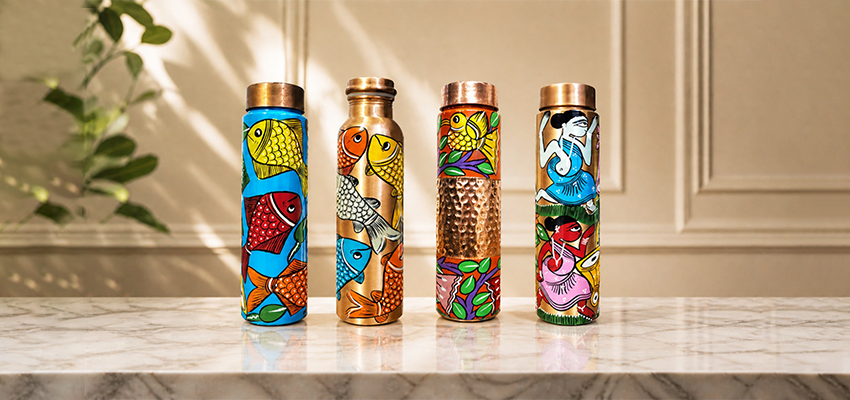
How to Clean a Copper Bottle at Home: 6 Natural Methods (+ Hand-Painted Bottle Guide)

To clean a copper bottle at home, squeeze half a lemon into the bottle, add one tablespoon of salt and half a cup of warm water, shake vigorously for 30–60 seconds, let it sit for 10–15 minutes, then rinse thoroughly with cold water and dry completely. Do this once a week for best results.
That’s the quick answer. But if you own a copper bottle — especially a hand-painted one — there’s more you should know to keep it safe, hygienic, and beautiful for years.
This guide covers 6 natural cleaning methods, a special section for hand-painted copper bottles that most people get wrong, daily maintenance habits, and the most common cleaning mistakes to avoid.
Want to know why copper water is worth keeping up with in the first place? Read: Benefits of Drinking Water from a Copper Bottle.
Why Copper Bottles Need Regular Cleaning
Copper is a living metal. It reacts with oxygen, moisture, and even the minerals in your water. Over time, this creates a dark brownish or greenish layer on the inner surface called patina or verdigris.
This is completely natural — it doesn’t mean your bottle is ruined. But if left uncleaned for weeks, it can:
- Alter the taste of your water
- Reduce the oligodynamic effect (the antimicrobial benefit of copper water)
- In rare cases of severe buildup, affect the hygiene of your water
Regular, gentle cleaning removes this buildup and keeps your bottle functioning and looking its best. The good news: you need nothing from a shop. Everything you need is already in your kitchen.

How Often Should You Clean Your Copper Bottle?
Cleaning Type | Frequency |
Quick rinse with plain water | Every day after use |
Deep clean (lemon + salt method) | Once a week |
Full shine restore | Once a month |
Before storing away for a long period | Before and after |
Never leave water sitting in the bottle for more than 8 hours without drinking it — especially in summer.

6 Natural Ways to Clean Your Copper Bottle at Home
Method 1: Lemon + Salt (Best for Weekly Deep Cleaning)
This is the gold standard. The citric acid in lemon dissolves oxidation, while salt acts as a gentle abrasive that scrubs it away.
What you need: Half a lemon, 1 tablespoon of salt, half a cup of warm water
Steps:
- Squeeze the lemon juice directly into the bottle
- Add 1 tablespoon of salt
- Add half a cup of warm water
- Cap the bottle and shake vigorously for 30–60 seconds
- Let the mixture sit inside for 10–15 minutes
- Pour it out and rinse thoroughly with plain cold water — multiple times
- Dry the bottle completely with a soft cloth, inside and out
Result: Removes dark spots, tarnish, and odour. Leaves the inner surface shiny.
Method 2: Vinegar + Salt (Best for Stubborn Stains)
If your bottle has been unused for a while and has heavy patina, vinegar’s acetic acid is more aggressive than lemon — in a good way.
What you need: 2 tablespoons of white vinegar, 1 tablespoon of salt, warm water
Steps:
- Mix vinegar and salt in the bottle
- Fill to about a quarter with warm water
- Shake well for 1 minute
- Let sit for 10 minutes
- Rinse thoroughly at least 3 times with plain water
- Dry completely
Note: The smell of vinegar disappears completely after thorough rinsing.
Method 3: Baking Soda + Warm Water (Best for Odour Removal)
If your bottle has a metallic or stale smell, baking soda neutralises odours gently without scratching the surface.
What you need: 2 tablespoons of baking soda, warm water
Steps:
- Add baking soda into the bottle
- Fill halfway with warm water
- Shake well
- Let sit for 20–30 minutes
- Rinse thoroughly and dry
Method 4: Tamarind Paste (Traditional Indian Method)
Imli has been used to clean brass and copper in Indian homes for generations — and for good reason. Tamarind’s natural acids work beautifully on copper.
What you need: 1 teaspoon of tamarind paste, warm water
Steps:
- Mix tamarind paste with a little warm water to make a thin solution
- Pour into the bottle
- Shake and let sit for 15 minutes
- Rinse well with plain water
- Dry completely
This method is especially good for restoring the warm reddish glow to dull copper.
Method 5: Ketchup (Yes, Really)
Ketchup contains both vinegar and tomato acid — two natural copper cleaners in one. It sounds unusual but it works.
Method 6: Plain Warm Water Rinse (Daily Maintenance)
After drinking your morning copper water, don’t skip this. Rinse the bottle with plain warm water, shake, pour out, and leave it open to air-dry. This 30-second habit prevents buildup from forming in the first place.

Special Guide: How to Clean a Hand-Painted Copper Bottle
This is the section you won’t find anywhere else — because most copper bottle guides assume you have a plain metal bottle.
If you own a hand-painted copper bottle — with Pattachitra, Madhubani, or tribal folk art on the outside — the exterior requires completely different care to the interior.
The paint on Dirums bottles is protected with a sealant layer, but it’s still a craft surface, not industrial coating. Here’s how to care for it properly:
Cleaning the Outside of a Hand-Painted Bottle
✅ Do: Wipe the outside gently with a soft, dry cloth to remove dust and fingerprints
✅ Do: For light surface stains, use a slightly damp cloth — no soap — and wipe gently in one direction
✅ Do: Store the bottle away from direct sunlight when not in use — UV light fades painted surfaces over time
✅ Do: Keep it on a wooden coaster or soft surface to avoid scratching the base
❌ Don’t: Rub the outside with lemon, salt, or vinegar — these will strip the paint and sealant
❌ Don’t: Submerge or soak the bottle in water
❌ Don’t: Use a dishcloth, steel wool, or any abrasive material on the painted surface
❌ Don’t: Store in a damp or humid place (bathrooms, near kitchen sinks)
The rule is simple: Clean the inside with natural acids. Clean the outside with only a soft, dry cloth.
With this care routine, the artwork on a Dirums hand-painted bottle stays vibrant for years.
If you’re curious about the craft traditions painted on these bottles, read: How Copper Bottles Are Made: The Artisan Process
Daily Maintenance Habits That Make a Big Difference
Small daily habits reduce the need for deep cleaning and extend the life of your bottle significantly:
Use for water only. Never store milk, juice, lemon water, coffee, or fizzy drinks in a copper bottle. Acidic and dairy liquids react with copper and can cause harmful leaching. Plain drinking water at room temperature is the only right choice.
Store at room temperature. Never refrigerate your copper bottle. Cold temperatures reduce the oligodynamic effect — the very reason you’re using copper in the first place. Always room temperature.
Dry completely after every wash. Moisture left inside the bottle accelerates patina formation and odour. After rinsing, turn the bottle upside down on a clean cloth and leave the cap off until fully dry before reassembling.
Don’t leave water sitting for more than 8 hours. 6–8 hours is the ideal window for copper water. Beyond that, especially in warm weather, water can become stale. Empty, rinse, and refill fresh.
Never put it in the dishwasher. High heat and harsh detergents destroy copper’s surface, remove any protective coatings, and can permanently damage painted artwork.
Common Copper Bottle Cleaning Mistakes to Avoid
Mistake 1: Using chemical cleaners or bleach These strip the inner surface of copper and can leave residue that contaminates your water. Always stick to natural, food-safe ingredients.
Mistake 2: Scrubbing with steel wool or rough sponges Scratches on the inner surface create uneven areas where bacteria can hide. Use only soft cloths or bottle brushes with soft bristles.
Mistake 3: Not rinsing thoroughly after cleaning Leftover lemon juice or vinegar in the bottle will make your water taste acidic and will continue reacting with the copper beyond what’s beneficial. Always rinse 3–4 times until the water runs completely clear and odour-free.
Mistake 4: Leaving it wet inside A damp interior is where patina and odour build fastest. Always dry completely — inside and outside — before storing or refilling.
Mistake 5: Panicking about natural patina A slight darkening of the copper is completely normal and not harmful. It’s called natural patina. The weekly lemon + salt clean will restore the shine. Black or green spots that won’t come off after two cleanings are worth investigating — it may mean the bottle has been damp for too long.
FAQ — Cleaning & Maintaining a Copper Bottle
Q1: How often should I clean my copper bottle?
Rinse your copper bottle with plain warm water every day after use. Do a deep clean using lemon juice and salt once a week. If you notice dark patches, bad smell, or altered taste, clean it immediately regardless of schedule. Monthly, you can do a full shine restore using tamarind or the vinegar method.
Q2: Can I use soap to clean a copper bottle?
Avoid regular dish soap. Most soaps are mildly alkaline and can leave a film inside the bottle that interferes with the copper’s natural properties and leaves a soapy taste. Natural acidic cleaners like lemon juice and vinegar are far better suited to copper — they clean, deodorise, and restore shine simultaneously.
Q3: My copper bottle has turned black inside. Is it still safe to use?
A black or dark brown coating inside is natural oxidised patina — it is not harmful and does not mean the bottle is damaged. Clean it thoroughly using the lemon + salt method, let it sit for 15–20 minutes, then rinse well. Repeat if needed. The bottle is safe to use after thorough cleaning.
Q4: Can I put my copper bottle in the fridge or freezer?
No. Copper bottles should never be refrigerated or frozen. Cold temperatures inhibit the oligodynamic effect that makes copper water beneficial. They can also cause condensation to form inside, accelerating oxidation. Always store copper water at room temperature.
Q5: How do I clean the outside of a hand-painted copper bottle without damaging the art?
Use only a soft, dry cloth on the outside of a hand-painted copper bottle. For light stains, a slightly damp cloth (no soap, no chemicals) wiped gently is sufficient. Never apply lemon, salt, vinegar, or any cleaner directly to the painted surface. Keep it away from direct sunlight and damp environments to preserve both the art and the copper.
How Long Does a Well-Maintained Copper Bottle Last?
A quality copper bottle that is cleaned weekly, dried properly, used only for water, and stored correctly can last 5–10 years or more. The copper doesn’t wear out — what wears out is the care routine.
Hand-painted bottles that are treated gently on the outside retain their artwork for years. Many Dirums customers have been using their bottles daily for 2–3 years with the artwork completely intact.
The Right Copper Bottle Makes Maintenance Easier
Not all copper bottles are equal. Thin copper or bottles made from copper alloys can corrode faster and require more frequent cleaning. Pure copper bottles with a smooth interior and a secure lid are the easiest to maintain.
At Dirums, our copper bottles are crafted from pure copper by skilled artisans — the same families who have been working with the metal for generations. They know how copper should be shaped, finished, and sealed.
Explore our full collection: [Hand-Painted and Hammered Copper Bottles — copper-bottles