Your grandmother kept water in a copper vessel overnight. Your mother told you to drink it first thing in the morning. Turns out, they were onto something — and modern science backs up at least the biggest part of that old wisdom.
Drinking water stored in a copper bottle delivers real benefits. Researchers have confirmed copper’s powerful antimicrobial action in stored water in peer-reviewed studies, while many of its other benefits come from copper’s role as an essential nutrient and from centuries of Ayurvedic practice. In this guide, we cover 15 benefits of drinking water from a copper bottle, how long to store the water, what to avoid, and why the quality of your copper bottle matters more than most people realise.
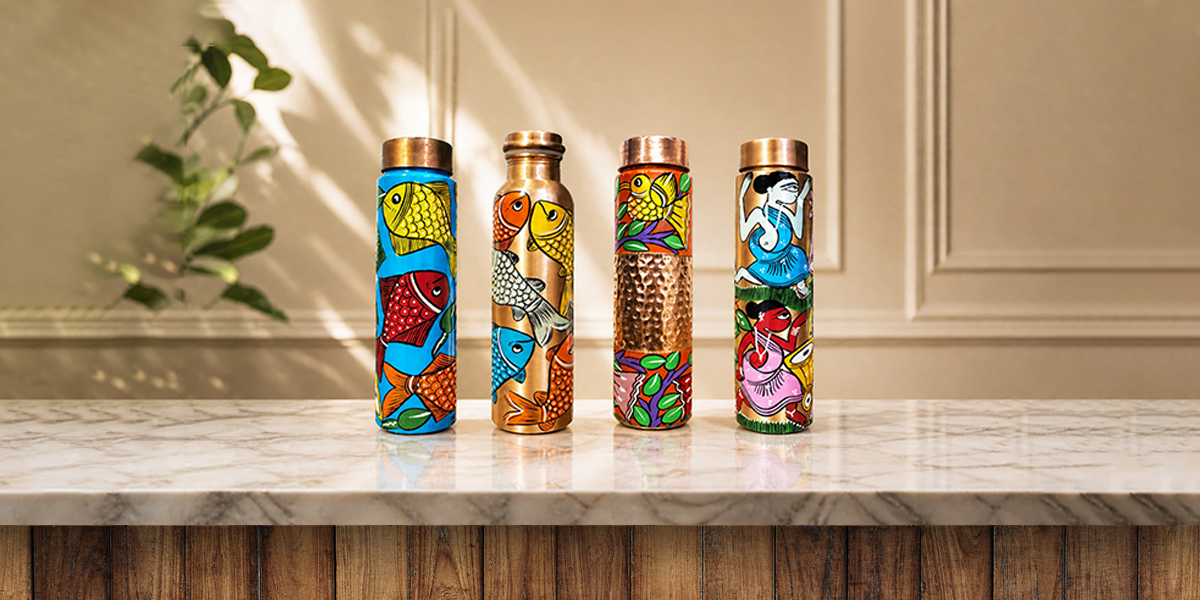
If you’re looking for a handmade copper bottle that’s both beautiful and functional, explore our collection of hand-painted copper bottles at Dirums.
What Happens When Water Sits in a Copper Bottle?
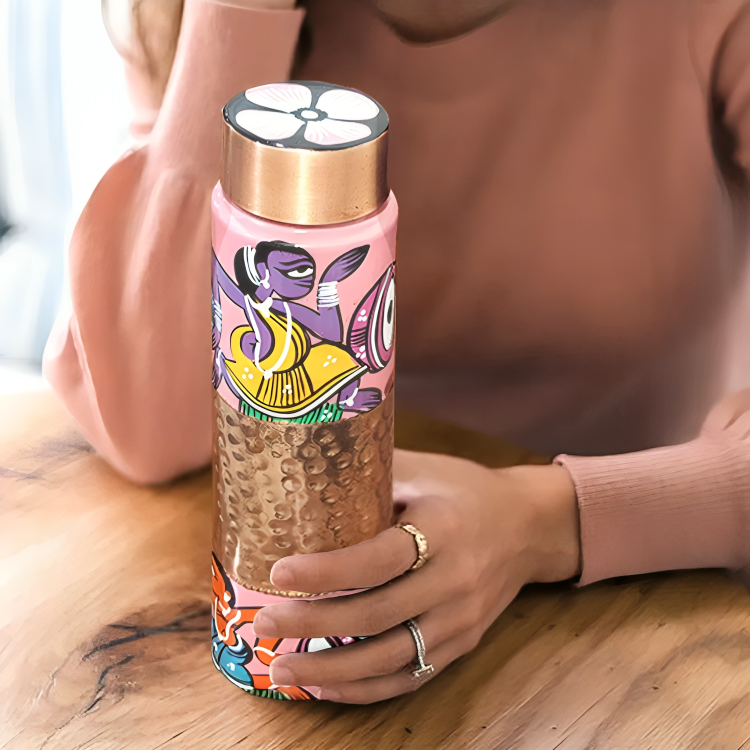
When water is stored in a copper vessel for 6–8 hours, a small and safe amount of copper releases into it through a natural process called the oligodynamic effect. This copper-infused water — called Tamra Jal in Ayurveda — is what delivers the benefits below.
The WHO’s guideline value for copper in drinking water is 2 mg per litre, considered safe for lifetime consumption. Reassuringly, when researchers measured water stored in copper pots for 16 hours, the copper level was only about 0.18 mg/litre — comfortably within that safe range — which makes properly used Tamra Jal safe for daily consumption for most healthy adults.
15 Benefits of Drinking Copper Water Daily
1. Kills Harmful Bacteria Naturally
This is the strongest, best-proven benefit. Copper is a natural antimicrobial. In a widely cited 2012 study in the Journal of Health, Population and Nutrition, water contaminated with dangerous bacteria — including E. coli, Salmonella, Shigella and the bacteria that cause cholera — had no recoverable bacteria after being stored in copper for 16 hours at room temperature. For Indian households that rely on stored water, a copper bottle adds a powerful natural layer of purification.
2. Adds a Natural Safety Layer Against Water-Borne Germs
Copper reduces the bacterial load in stored water, adding a natural safety layer — but think of it as a backup, not a replacement for safe, treated water. If your tap water is unsafe, keep boiling or filtering it; let copper be an extra line of defence, not the only one.
3. May Support Digestion
In Ayurveda, morning Tamra Jal is traditionally used to “wake up” the digestive system, ease acidity and reduce bloating. Copper is also a nutrient your body uses in iron absorption. Many daily users report a lighter stomach after switching to copper water in the morning, though large human studies on copper water specifically are still limited.
4. Supports a Healthy Immune System
Copper is an essential trace mineral that the body uses to make white blood cells and to run several enzymes involved in tissue repair and fighting oxidative stress. A small daily top-up through copper water can support normal immune function — especially helpful if your diet is low in copper.
5. Contributes to Heart Health (as a Nutrient)
Copper is one of the minerals the body needs for a healthy heart and blood vessels, and balanced copper levels are linked with normal cholesterol and blood-pressure regulation. That said, a copper bottle provides only trace copper, so treat it as gentle nutritional support — not a treatment for any heart condition. Anyone managing blood pressure or cholesterol should follow their doctor’s advice.
6. Traditionally Used for Weight Management
Copper is involved in fat metabolism as a nutrient, and Ayurveda traditionally recommends morning copper water as part of a weight-management routine — though strong human studies on copper water specifically are still limited. It works best alongside a balanced diet and activity, not on its own.
7. Traditionally Used for Joint Comfort
Copper has long been used in Ayurvedic tradition for joint and muscle comfort — the same idea behind copper bracelets worn for generations. Copper is also a nutrient the body uses to build healthy connective tissue. Direct evidence from drinking copper water is limited, so see this as traditional support rather than a proven remedy for arthritis.
8. May Support Skin Health
Copper is a nutrient involved in producing melanin (which gives skin its colour and helps protect it) and collagen (which keeps skin firm). Its antioxidant role helps the body manage free radicals, which are linked to dull, ageing skin. Copper water may support healthier-looking skin over time, especially when paired with good hydration, sleep and diet.
9. May Help With Visible Signs of Ageing
Free-radical damage contributes to fine lines, dullness and uneven tone. Because copper plays a part in the body’s antioxidant defences and in collagen formation, copper water is traditionally valued in South Asian beauty rituals for a firmer, fresher look over time. Results are gradual and supportive, not dramatic or instant.
10. A Nutrient the Thyroid Needs
The thyroid gland uses copper to help produce and regulate its hormones, and a copper deficiency can contribute to fatigue and sluggish metabolism. Copper water is a gentle, food-safe way to support copper intake as part of a balanced diet — but it is not a treatment for thyroid disease. If you have a diagnosed thyroid condition, follow your doctor’s plan.
11. Supports Strong Bones (as a Nutrient)
Copper is required to form collagen and elastin — the structural proteins that keep bones dense and flexible. Adequate copper intake, as part of an overall nutritious diet, supports bone health and may be one small factor in maintaining bone density, particularly for women over 40. It complements, but does not replace, calcium, vitamin D and exercise.
12. Supports Brain and Nerve Function
Copper is involved in building the myelin sheath that protects your nerves, so the body needs it for a healthy nervous system. Ayurvedic texts describe copper water as medhya — traditionally associated with mental clarity. Modern evidence here is largely about copper as a nutrient rather than copper water specifically.
13. Helps the Body Use Iron (Relevant to Anaemia)
Iron-deficiency anaemia is one of India’s most common nutritional problems, especially among women. Copper is a nutrient the body needs to absorb iron properly and make haemoglobin. So copper water can be a small, supportive habit alongside an iron-rich diet and any treatment your doctor prescribes — not a stand-alone cure for anaemia.
14. Traditionally Balances All Three Doshas (Ayurvedic Belief)
In Ayurveda, copper water is considered tridosha nashak — believed to help balance Vata, Pitta and Kapha, the three fundamental energies of the body. Storing water in a copper vessel overnight and drinking it first thing in the morning is a cornerstone of traditional Ayurvedic routines (dinacharya). This is time-honoured tradition rather than clinically proven medicine.
To understand the full Ayurvedic science behind this practice, read our in-depth guide: the Ayurvedic science of copper water — what research actually says.
15. A Daily Ritual That Connects You to Craft
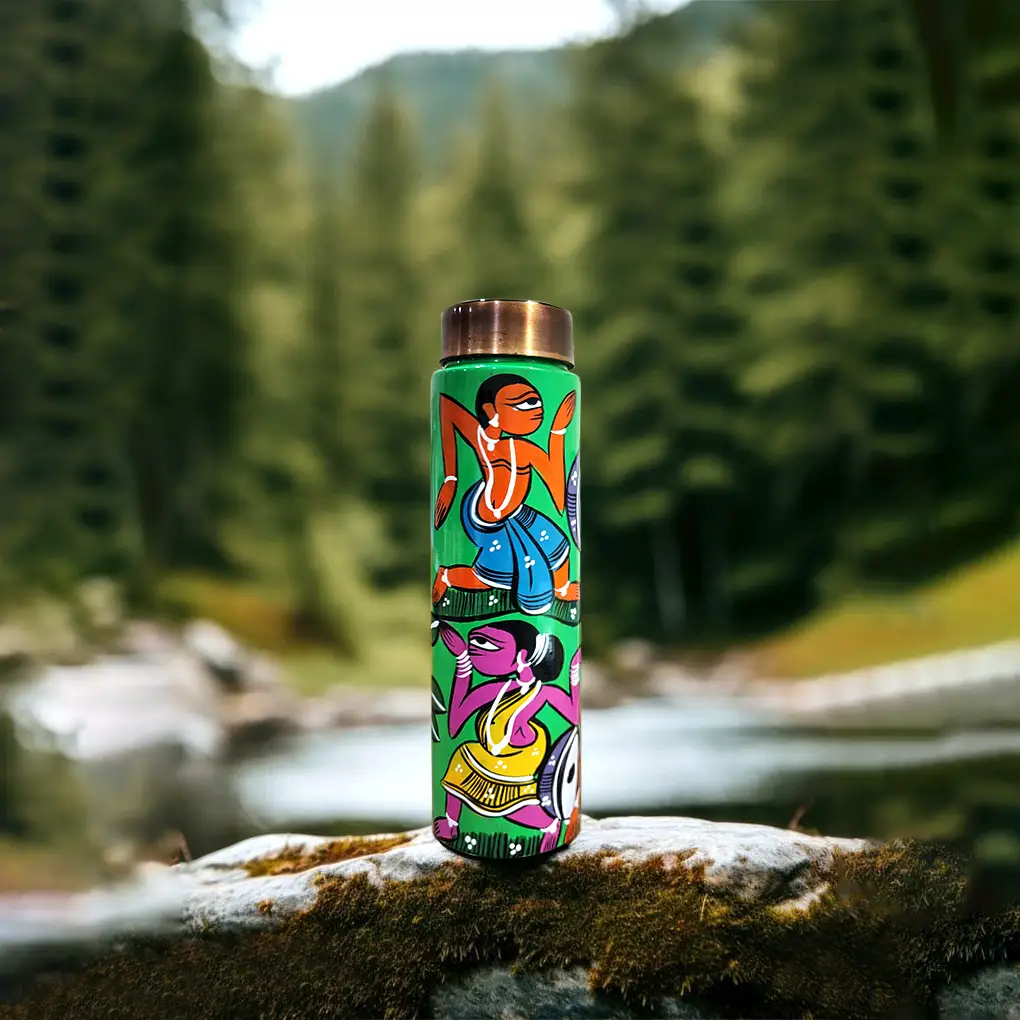
This one isn’t in any medical textbook — but it matters. When your copper bottle is hand-painted by an artisan from Rajasthan or Odisha, drinking from it becomes more than a health habit. It becomes a daily moment of connection — with Indian craft, with a maker’s story, with something that is uniquely, beautifully yours.
At Dirums, every copper bottle is made by hand. No two pieces are identical. The artisan who painted yours spent hours on it — a kind of value no mass-produced bottle can offer. Browse the hand-painted Pattachitra copper bottle to see what that looks like.
How to Use a Copper Bottle Correctly
Getting the full benefits of copper water requires using the bottle the right way:
- Store overnight, drink in the morning. Fill your copper bottle with room-temperature water before bed. Let it sit for 6–8 hours. Drink the first 1–2 glasses on an empty stomach in the morning.
- Do not refrigerate. Cold temperatures slow down the oligodynamic effect. Always store at room temperature.
- Drink in moderation. 2–3 glasses of copper water a day is plenty. A properly used copper bottle keeps you well within the WHO safe limit of 2 mg per litre.
- Avoid acidic liquids. Never store lemon water, juices or any citrus-based drink in your copper bottle. Acid pulls copper out faster and can push levels too high.
- Take a break. A short break of about a month every two to three months helps avoid any build-up.
How to Clean Your Copper Bottle (Important)
Copper naturally oxidises over time, forming a dark patina or greenish layer (called verdigris). Cleaning it regularly keeps it hygienic and working well.
Natural cleaning method: Fill the bottle with a mix of lemon juice and salt, let it sit for about 10 minutes, then rinse thoroughly with plain water. Do this roughly once a week. Never use chemical cleaners or steel scrubbers — they damage the inner surface.
For a complete step-by-step method, plus special care for hand-painted bottles, read: how to clean and maintain a copper bottle at home.
Who Should Avoid Copper Water?
Copper water is safe for most healthy adults, but a few groups should consult a doctor first:
- People with Wilson’s disease (a condition where the body cannot process copper)
- Those with existing liver or kidney conditions
- Pregnant women and infants
- People already taking copper supplements
When in doubt, start with one glass a day and observe how your body responds.
FAQ — Copper Bottle Benefits
What is the main benefit of drinking water from a copper bottle?
The main, best-proven benefit is natural antimicrobial purification: copper ions kill harmful bacteria in stored water, making it safer to drink. Beyond that, copper is an essential nutrient that supports digestion, immunity, skin and heart health, and Ayurveda values copper water as a daily wellness ritual. It’s one of the most multi-purpose healthy habits you can build.
How many hours should water be kept in a copper bottle before drinking?
Store water for a minimum of 6 hours, ideally overnight (around 8 hours), at room temperature. This gives the oligodynamic effect time to work and lets safe levels of copper infuse into the water. Avoid storing water for more than 16–18 hours at a stretch, and don’t refrigerate it, as cold slows the process down.
Can we drink copper water daily?
Yes — for most healthy adults, 2–3 glasses a day is safe and beneficial. The WHO sets a safe guideline of 2 mg of copper per litre of water, and a properly used copper bottle stays well within this. To stay safe, don’t store acidic drinks in copper, don’t over-store water, and take a short break of about a month every two to three months.
Is copper water good for skin?
Copper is a nutrient involved in melanin and collagen production and in the body’s antioxidant defences, all of which matter for healthy skin. So copper water may support clearer, firmer, more even-toned skin over time. Think of it as gentle support that works best alongside good hydration, sleep and diet — not an instant fix or a substitute for skincare.
What are the disadvantages of a copper water bottle?
The main risk is too much copper from improper use — storing water too long, using damaged bottles, or keeping acidic drinks in copper. Excess copper can cause nausea, vomiting and stomach cramps. Using a quality bottle correctly (6–8 hours storage, room temperature, no citrus, weekly cleaning, occasional breaks) keeps you within safe limits for most people.
Conclusion
Drinking water from a copper bottle is one of the simplest wellness habits you can build. Its water-purifying power is genuinely proven by research, while its other benefits draw on copper’s role as an essential nutrient and on centuries of Ayurvedic tradition. The key is using a quality copper bottle correctly: store overnight, drink on an empty stomach, clean weekly, and avoid acidic liquids.
If you’re ready to start, explore Dirums’ collection of handmade, hand-painted copper bottles. Each bottle is crafted by Indian artisans, making it as beautiful to display as it is beneficial to use.