What is Dhokra Art? How Tribal Artisans Make Brass Figurines Using a 4000-Year-Old Technique
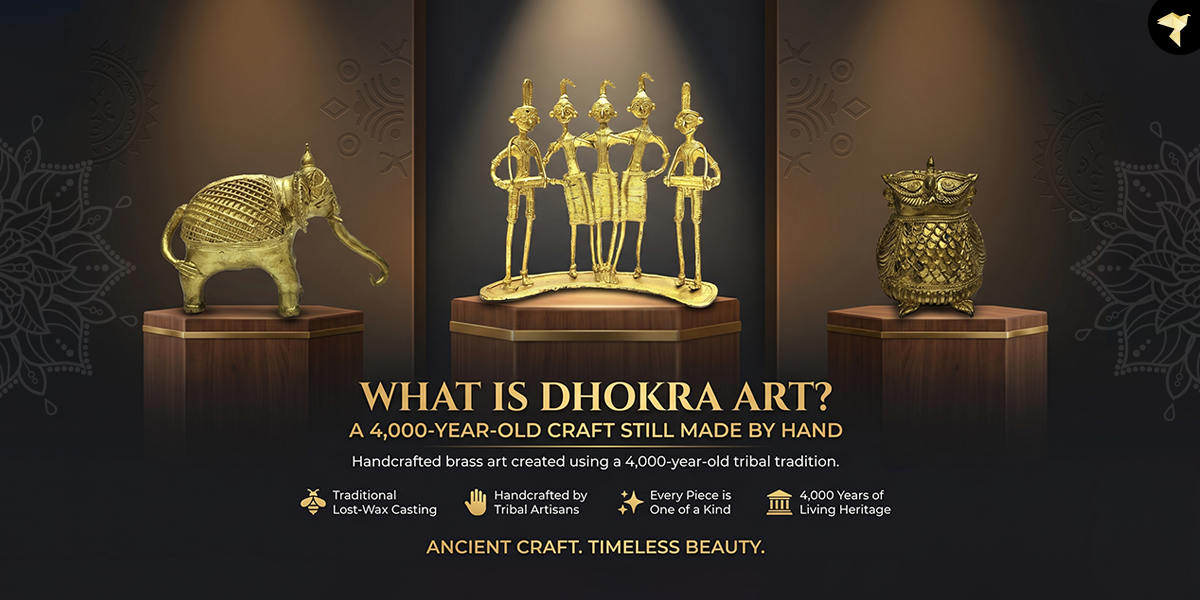
What is Dhokra Art? How Tribal Artisans Make Brass Figurines Using a 4000-Year-Old Technique
Imagine holding in your hands an object made using the exact same technique as an artefact found in the Indus Valley Civilisation — a civilisation that flourished over 4,000 years ago. That is what a Dhokra art piece is.
Dhokra is one of the oldest metal casting traditions in the world. It is made by tribal artisans, primarily in Chhattisgarh, Jharkhand, West Bengal, and Odisha, using a technique called lost-wax casting. And today, Dhokra mementos and figurines are among the most sought-after handcrafted tribal art pieces in India.
What Does Dhokra Mean?
Dhokra (also spelled Dokra) is a name given to the art form and the community of metalworkers who practise it. The Dhokra Damar tribes of West Bengal and the artisans of Bastar in Chhattisgarh are the primary custodians of this tradition.
The art form is characterised by its distinctive rough, grainy surface texture — a result of the casting process — and its warm golden-brass colour.

The Lost-Wax Casting Technique — Explained Simply
The technique behind Dhokra art is called Cire Perdue in French, or ‘lost-wax casting.’ Here is how it works:
- The artisan collects beeswax and melts it into a workable form.
- The wax is shaped by hand into the desired figure — a dancer, an elephant, a horse, a deity.
- The wax model is then coated with a thick layer of clay mixed with sand, rice husk, and cow dung. This creates the outer mould.
- The mould is left to dry for several days.
- The mould is then fired in a kiln or open fire. The wax inside melts and drains out — this is the ‘lost wax’ step.
- Molten brass or bronze is poured into the hollow mould.
- After cooling, the clay mould is broken open to reveal the brass figure inside.
- The artisan cleans and finishes the piece by hand.
Because the mould is destroyed in the process, every Dhokra piece is one of a kind. There is no mass production possible with this technique — each figure requires a new wax model and a new mould.
Why Dhokra Art is Special
|

Tribal Dancers
One of the most iconic Dhokra images is a tribal dancer mid-movement — arms outstretched, expression joyful. This represents the vibrant festival culture of central Indian tribes where dance is central to community life.
Elephants and Horses
Animals have deep symbolic meaning in tribal culture. Elephants represent strength and prosperity, while horses represent speed and freedom. Dhokra elephants and horses are among the most popular collector pieces.
Goddess Lakshmi and Other Deities
Many tribal communities worship nature deities alongside Hindu gods. Dhokra pieces of Goddess Lakshmi, Ganesh, and local tribal deities are common and make meaningful devotional gifts.
The Cow
The cow is sacred in Indian culture and appears frequently in Dhokra art. Our Dhokra Cow Frame Memento on Dirums is a beautiful example — a brass cow figure set in a frame-style design perfect for display.

How to Care for Your Dhokra Art Piece
- Dust regularly with a soft, dry cloth. Avoid wet cleaning.
- Do not expose to harsh chemicals or cleaning agents.
- Keep away from direct moisture — brass can develop a green patina over time (this is natural and considered beautiful, but keep it dry if you prefer the original finish).
- If the piece develops tarnish, gently polish with a mixture of lemon juice and salt, then wipe clean.
Shop Now Shop our handcrafted Dhokra tribal art mementos — Cow Frame, Tribal Dance figure, and more: |
Why Buy Dhokra Art Mementos?
A Dhokra memento is not just a decorative object. It is:
- A piece of ancient history you can hold in your hands
- Support for tribal artisan families who depend on this craft for their livelihood
- A one-of-a-kind object that cannot be replicated by machines
- A meaningful, premium gift that will last decades
Conclusion
Dhokra art is India’s living connection to the ancient world. When you buy a Dhokra memento, you are not just buying a beautiful object — you are supporting a 4,000-year-old tradition and the artisan families who keep it alive. In a world full of mass-produced gifts, Dhokra stands apart as something truly irreplaceable.
Shop Now Browse authentic Dhokra art mementos and tribal metal art at Dirums.com: |